Matthew Helmke

Technical writer · musician · reader

I wrote this in 1985

I am a technical writer. That is what I do for my day job. It is what I sometimes do for fun. Until recently, I did not realize that I have been doing this in some way since 1985. This was a school project I created when I was a fifteen-year-old high school freshman and found in a box in my mom’s house during a recent visit. It was originally accompanied by a balsa wood and paper scale aircraft model, which I built and which was created half covered and half exposed to show the airplane’s frame. This is not amazing work for someone my age today, but for a fifteen-year-old, I think it is impressive and worth sharing.
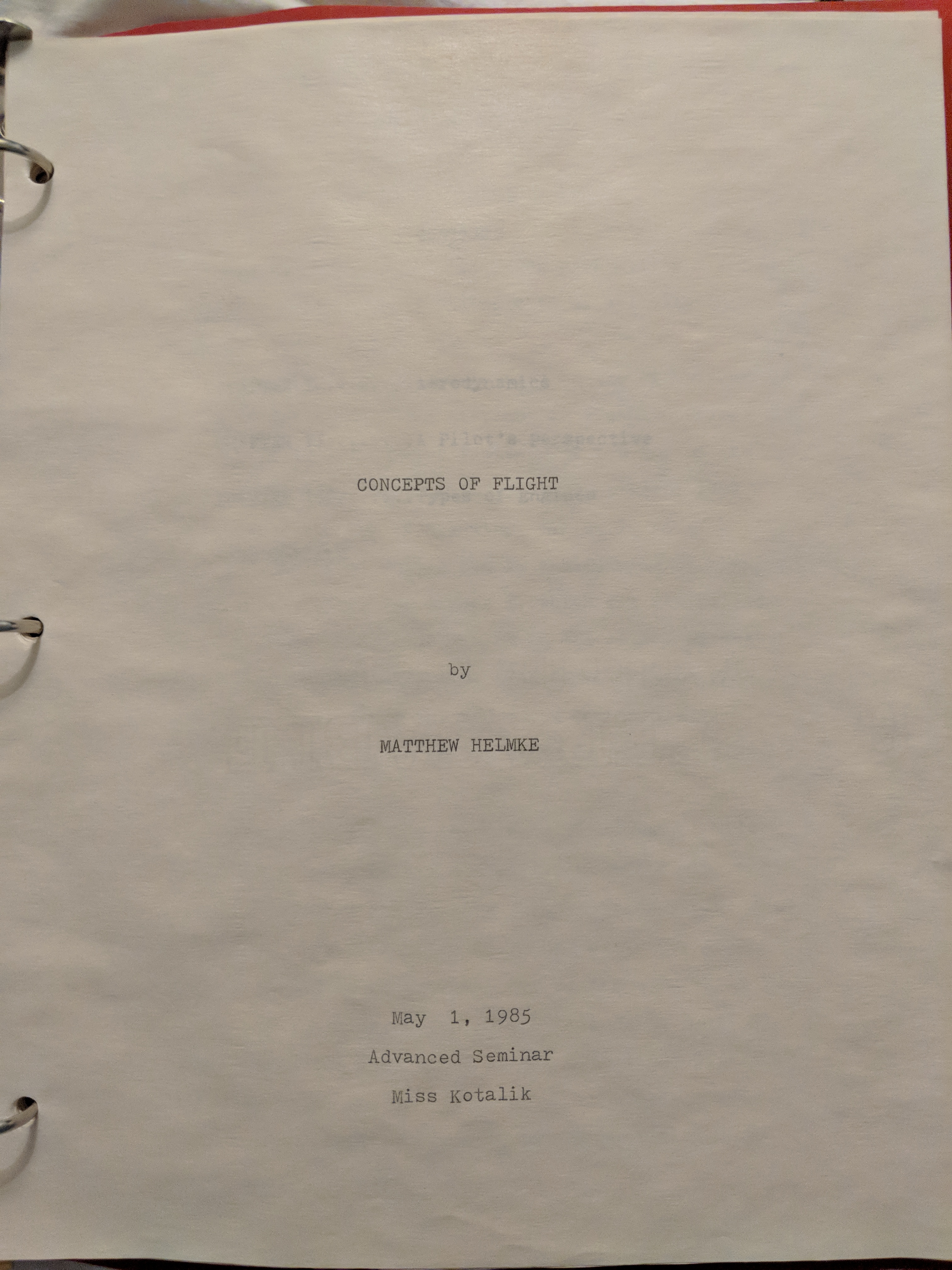
Typed title page: Concepts of Flight, by Matthew Helmke, dated May 1, 1985, for an Advanced Seminar with Miss Kotalik.

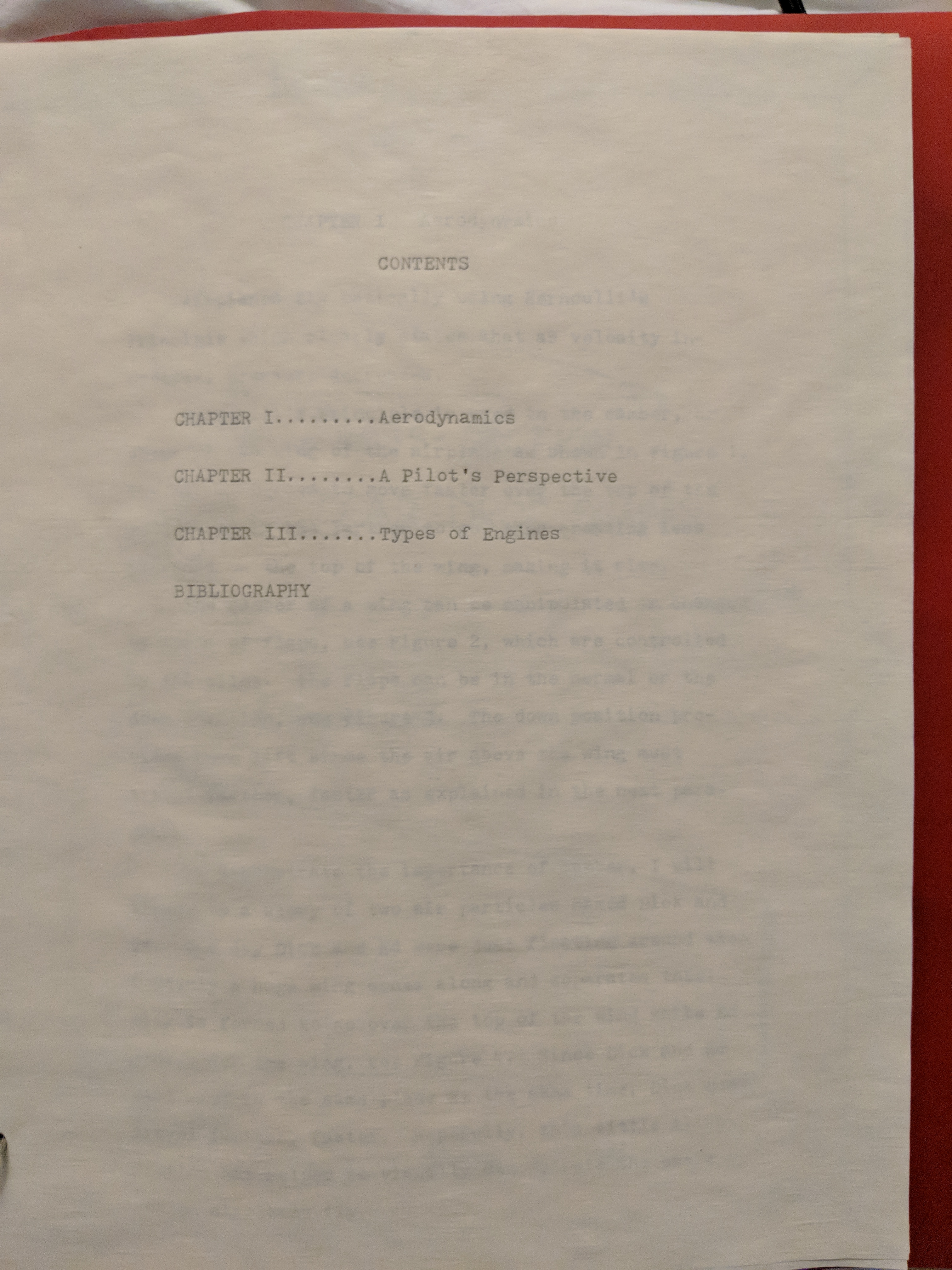
Typed table of contents listing three chapters — Aerodynamics, A Pilot's Perspective, and Types of Engines — plus a bibliography.

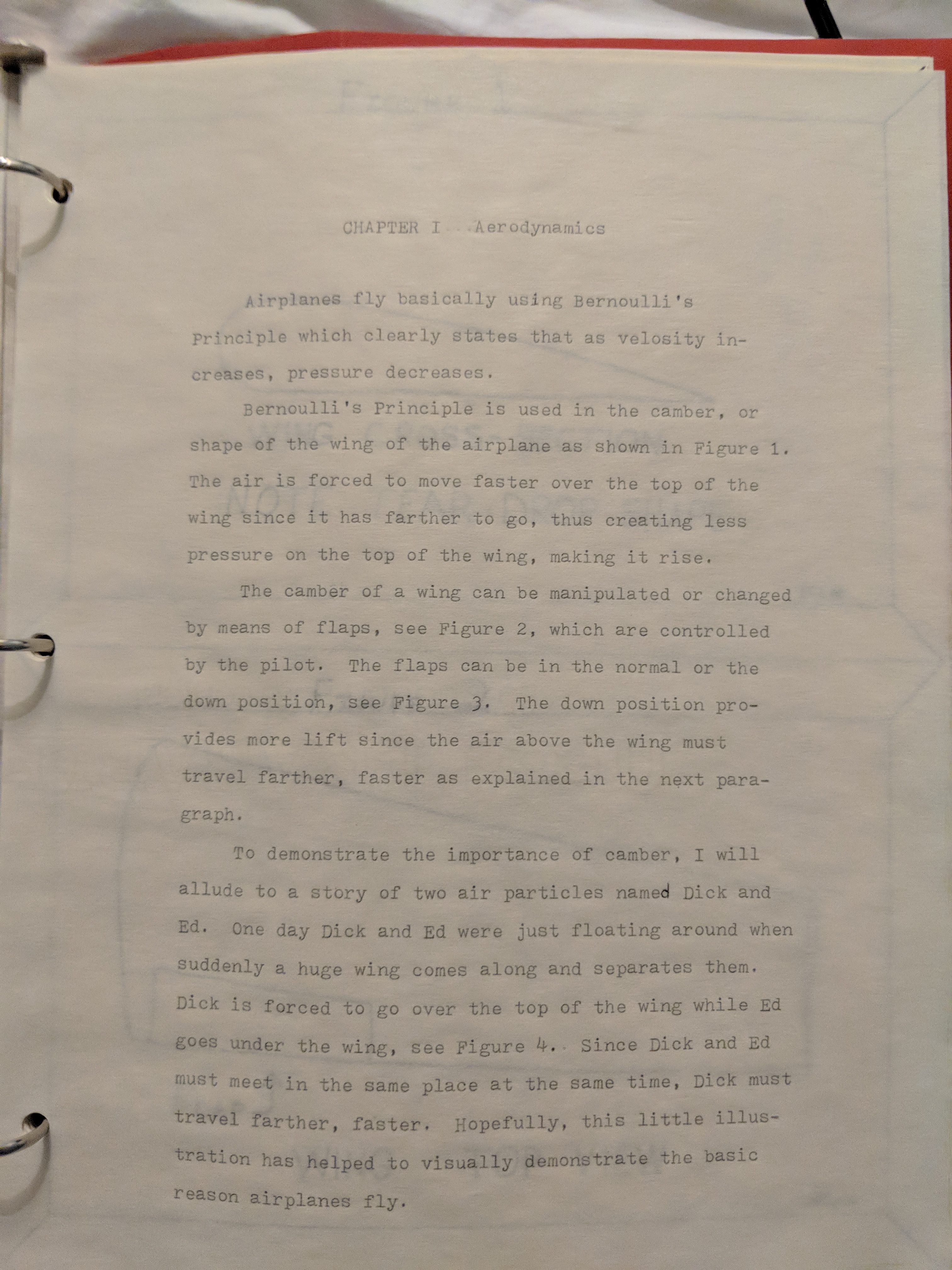
Typed page, Chapter I: Aerodynamics, explaining lift with Bernoulli's Principle and a story of two air particles named Dick and Ed.

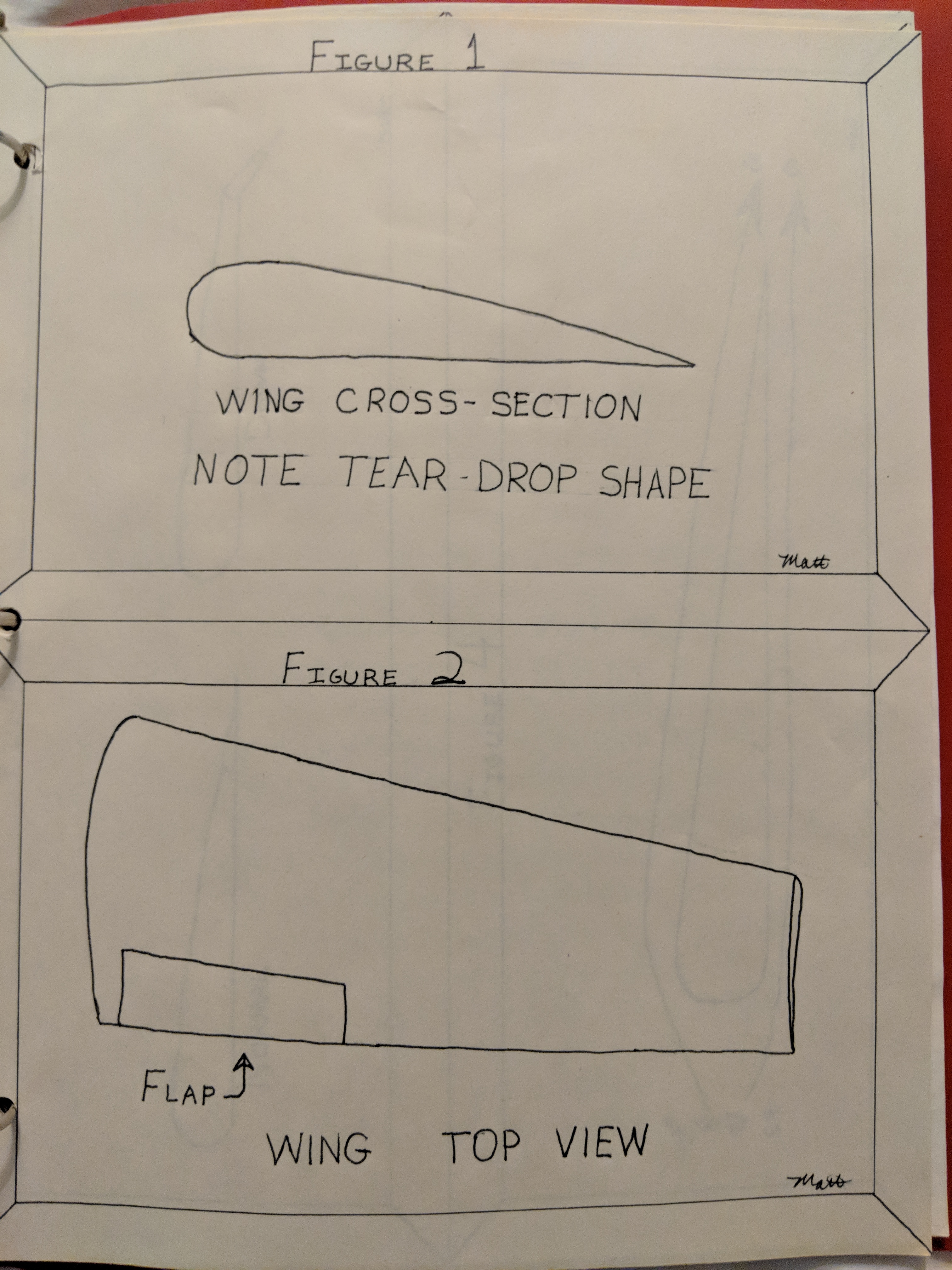
Two hand-drawn figures: a wing cross-section in a tear-drop shape, and a top view of a wing with its flap marked.

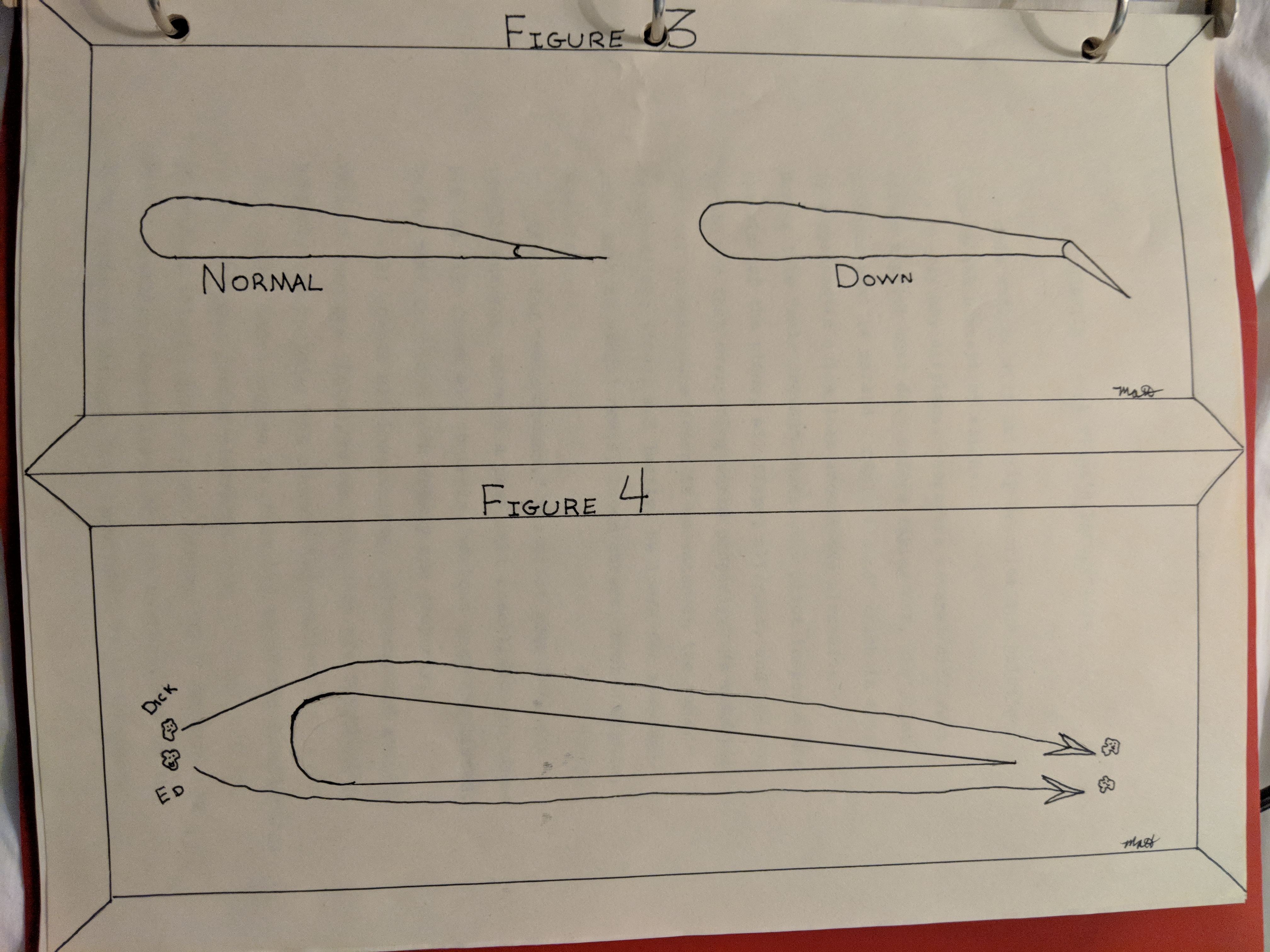
Two hand-drawn figures: a wing's flap in the normal and down positions, and air particles Dick and Ed splitting over and under a wing.

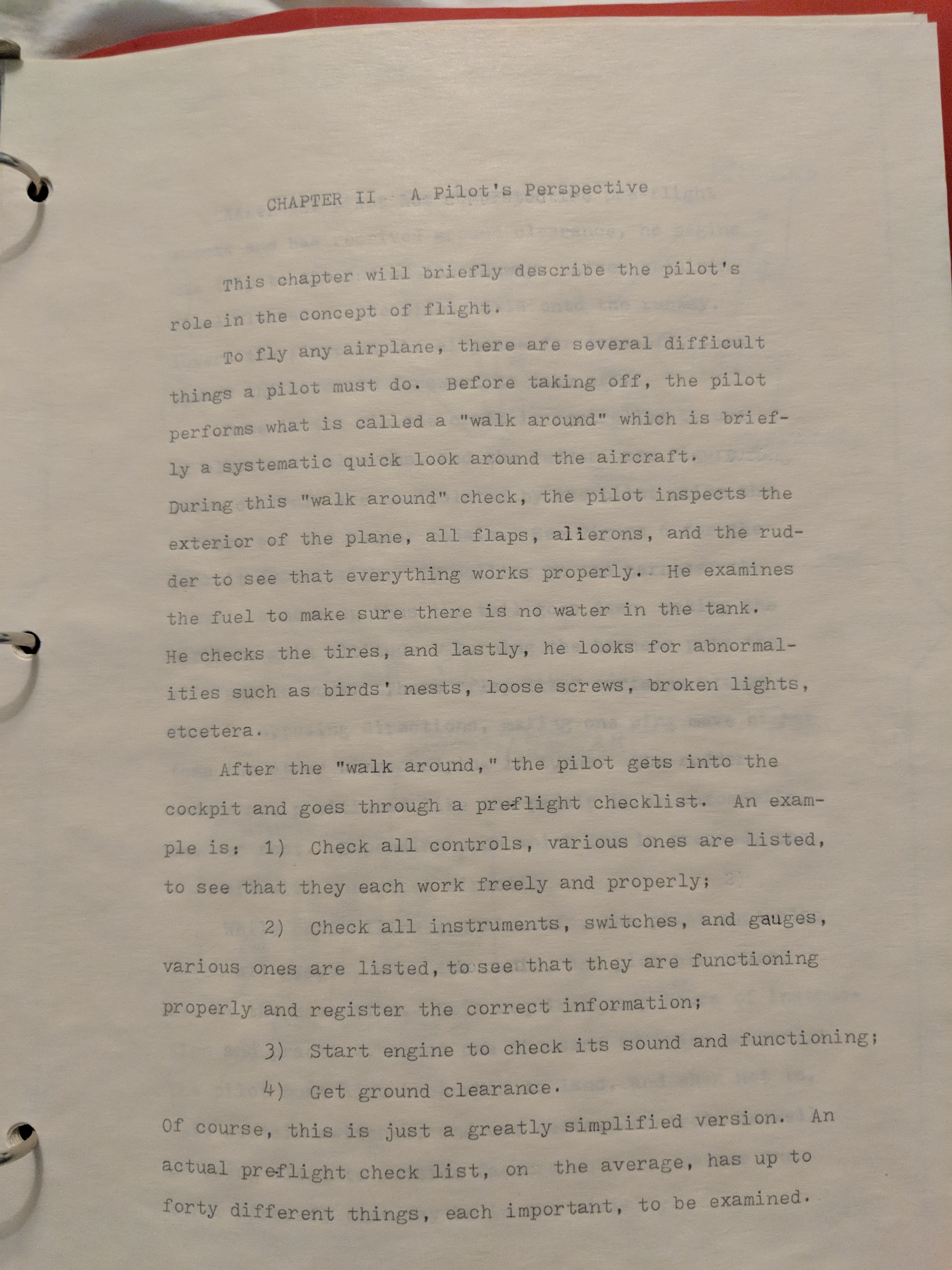
Typed page, Chapter II: A Pilot's Perspective, describing the pre-flight walk-around and a sample cockpit checklist.

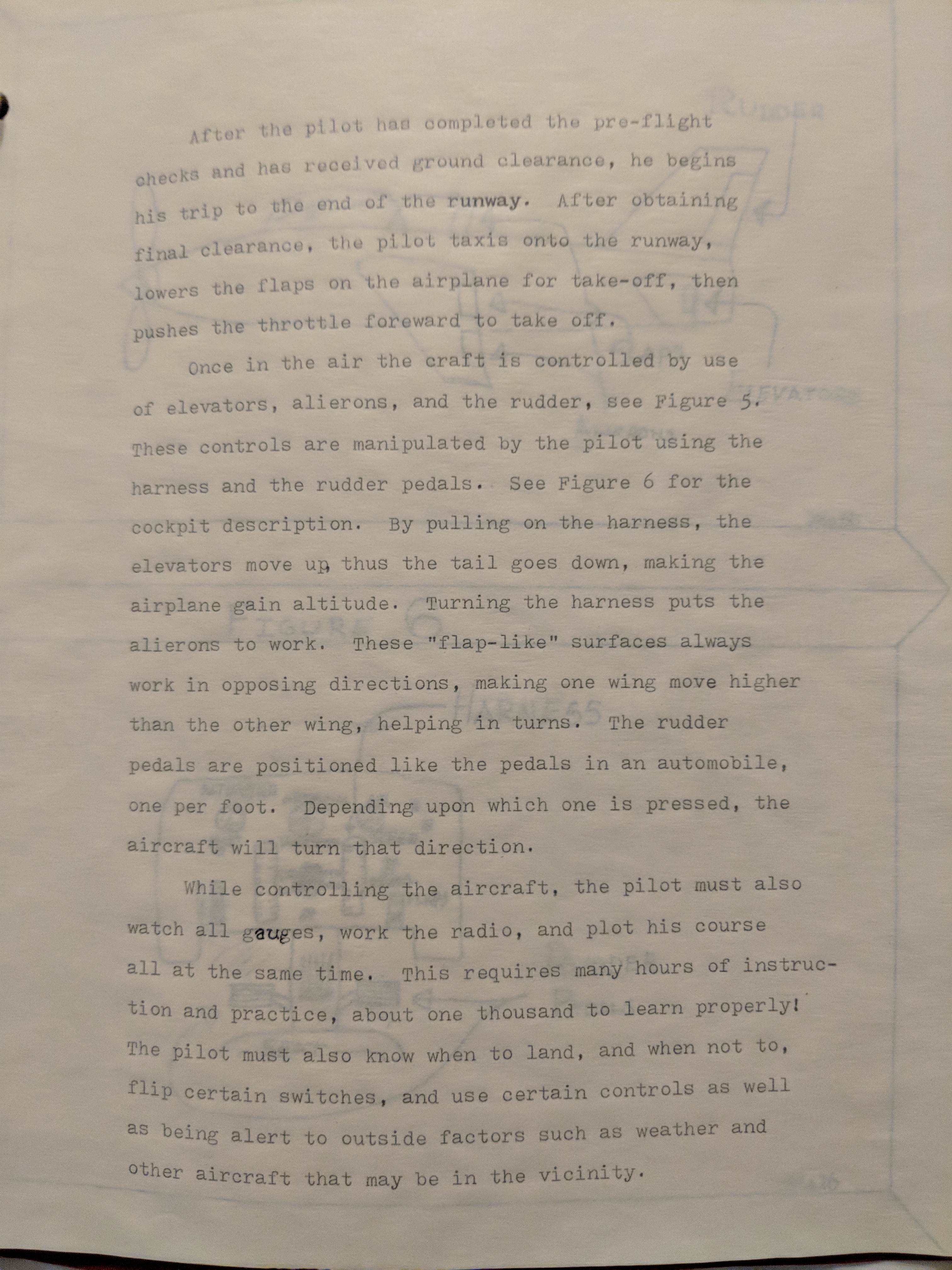
Typed page continuing Chapter II, on how the elevators, ailerons, and rudder are worked through the harness and rudder pedals in flight.

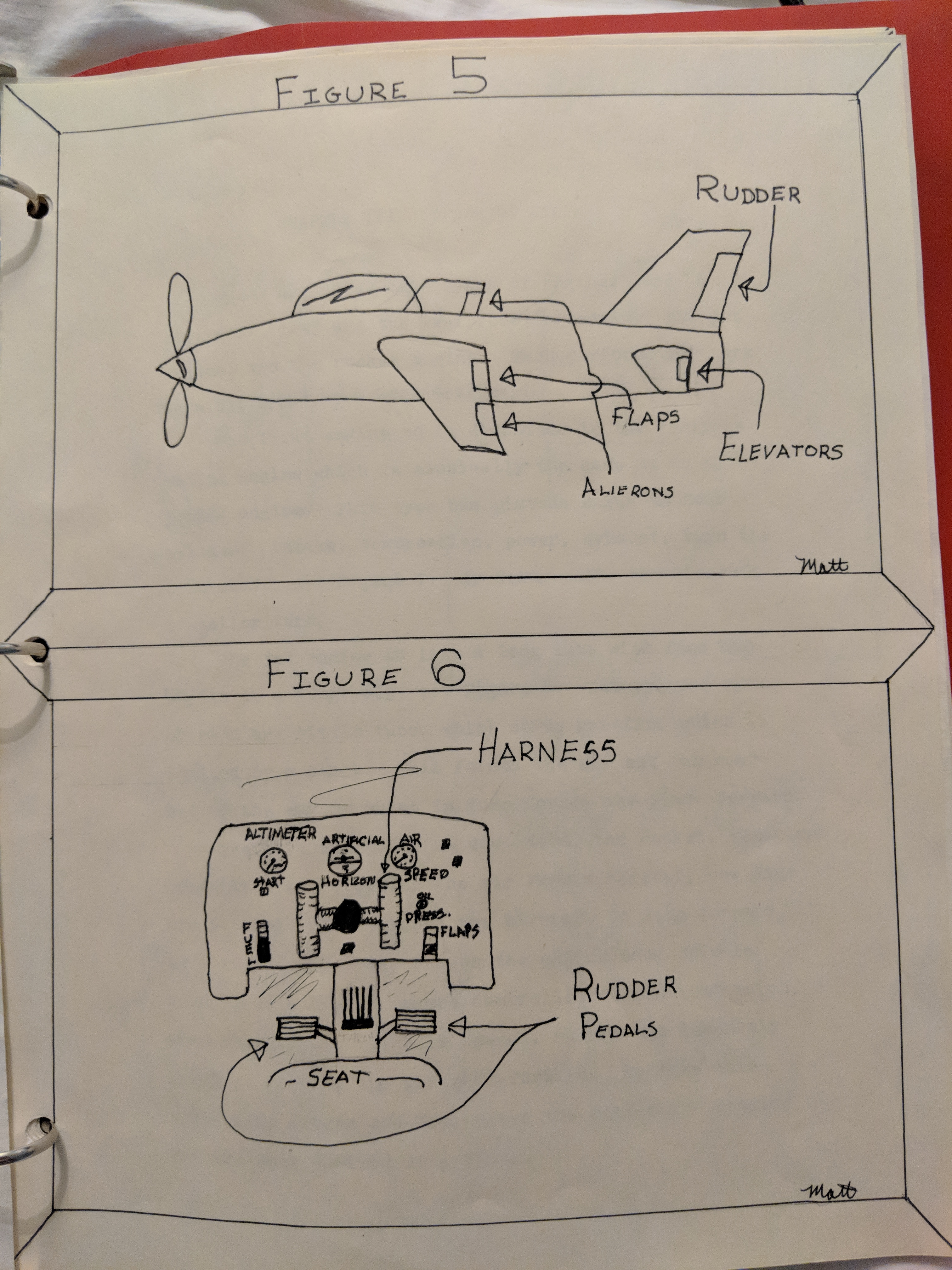
Two hand-drawn figures: a side view of a propeller plane labeling the rudder, elevators, ailerons, and flaps; and a cockpit panel with instruments, harness, and rudder pedals.

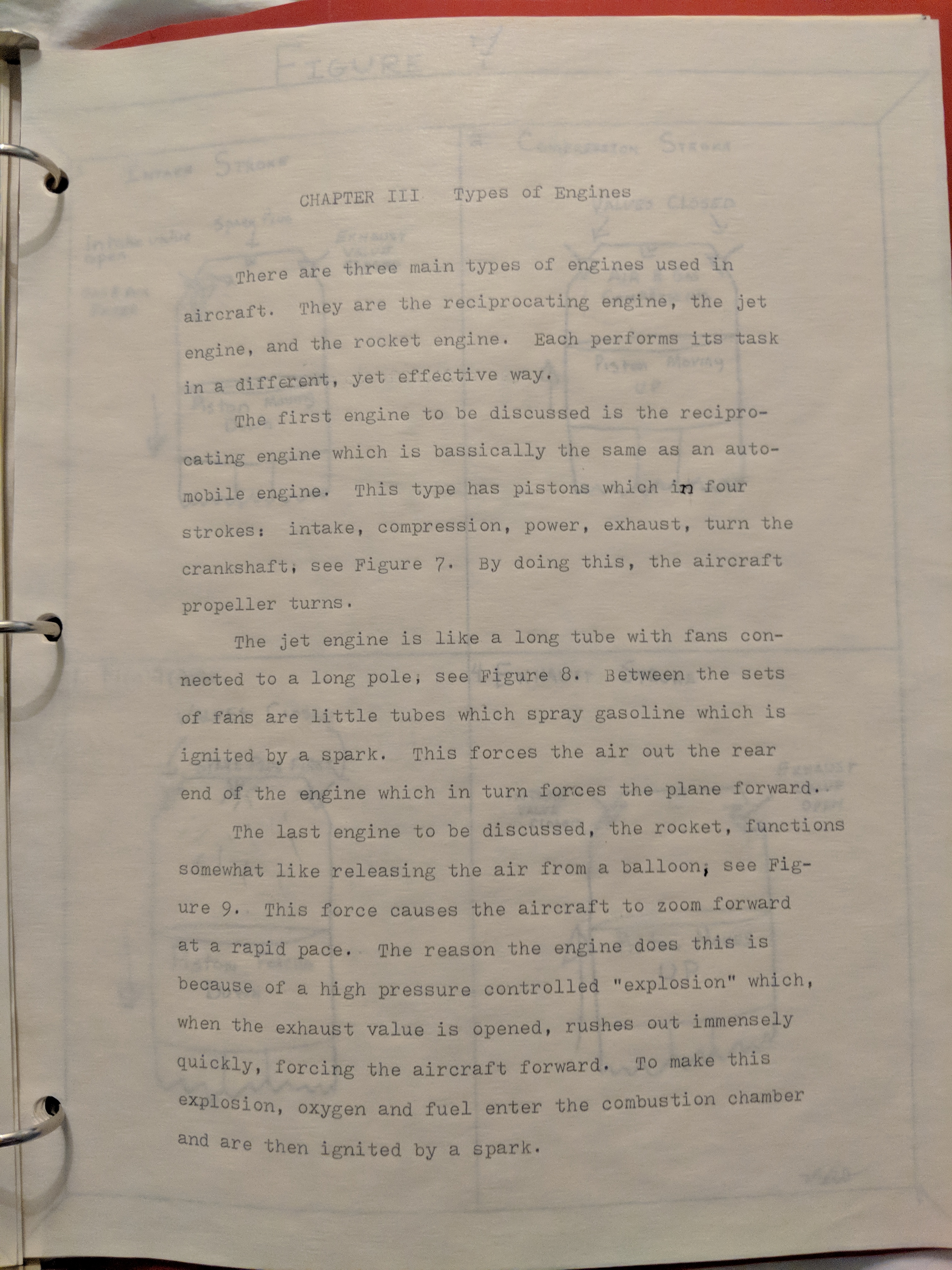
Typed page, Chapter III: Types of Engines, describing the reciprocating, jet, and rocket engines.

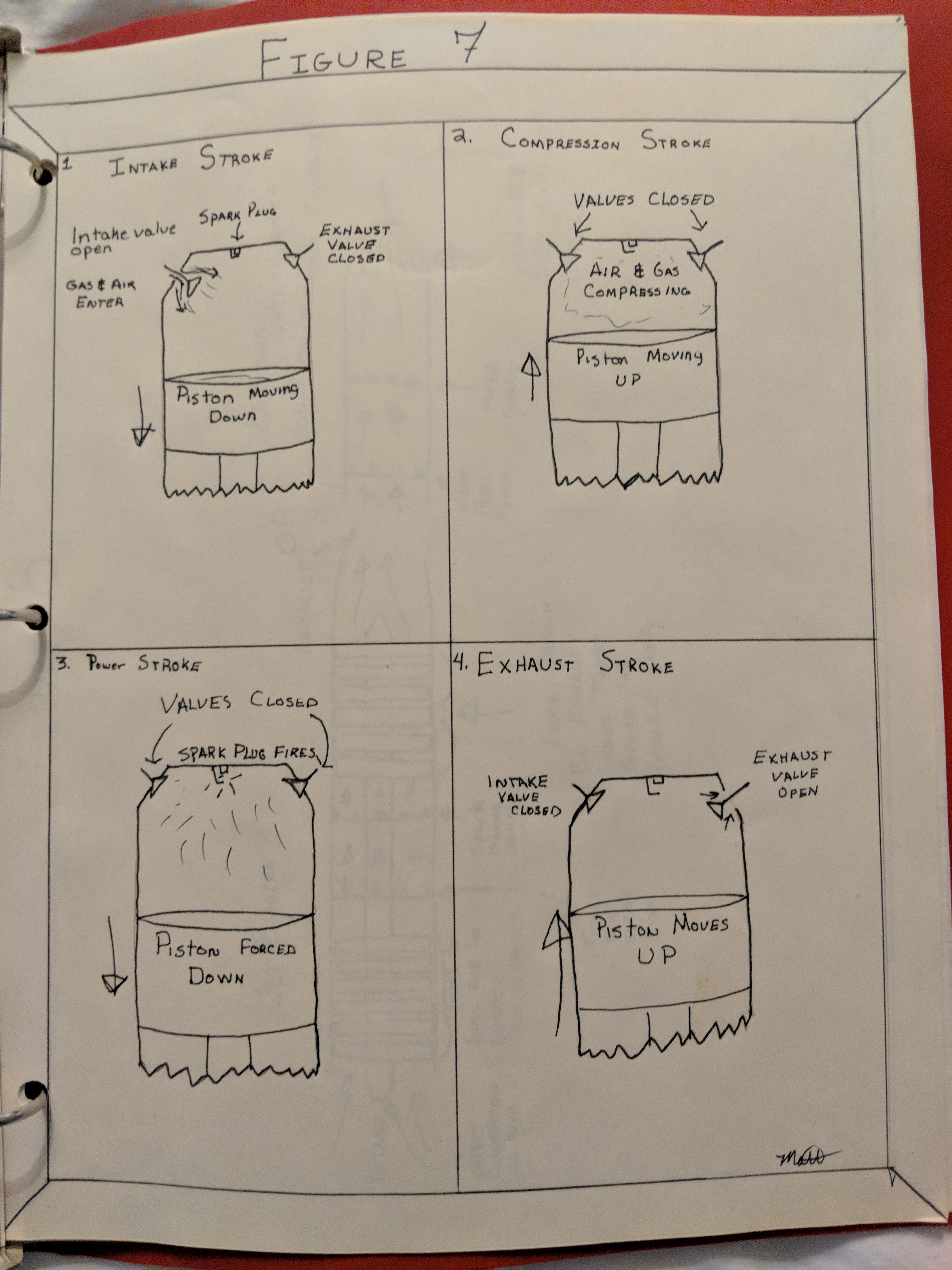
Hand-drawn figure of the four-stroke engine cycle — intake, compression, power, and exhaust — each panel showing the valve and piston positions.

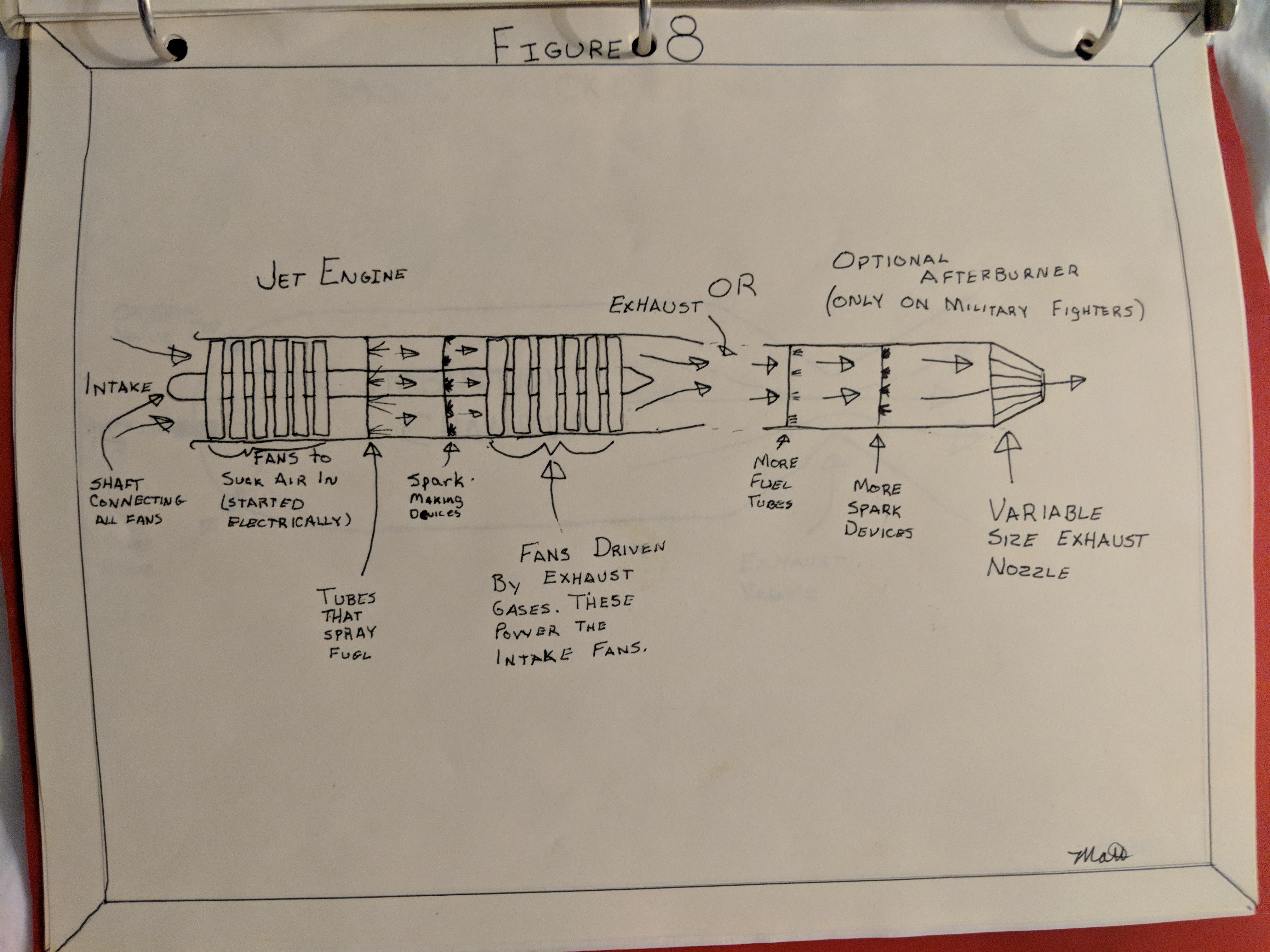
Hand-drawn cutaway of a jet engine — intake fans, fuel-spray tubes, spark devices, and exhaust-driven fans — with an optional military afterburner.

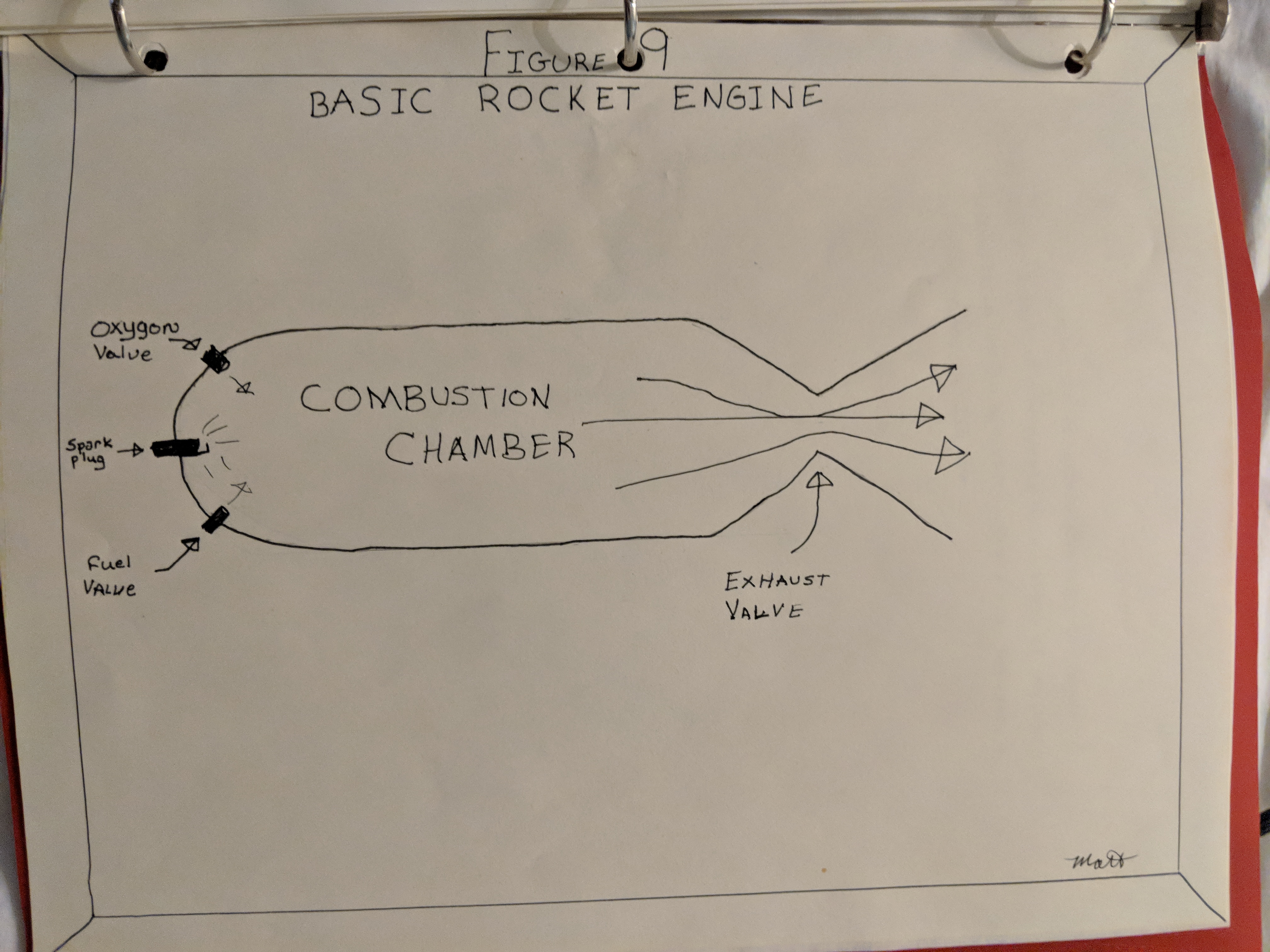
Hand-drawn diagram of a basic rocket engine: oxygen, fuel, and a spark plug feeding a combustion chamber that vents through an exhaust valve.

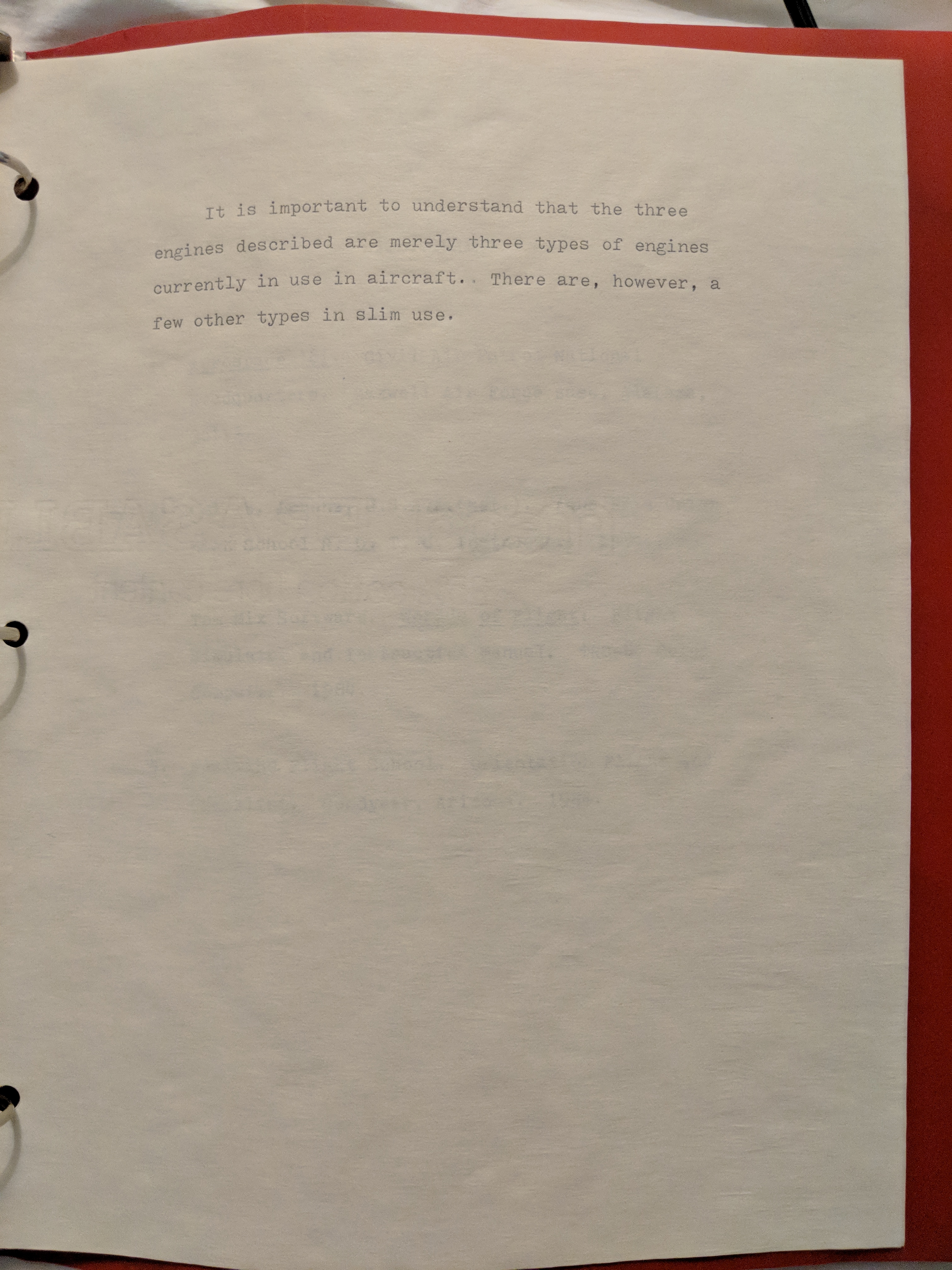
Typed closing page noting the three engines described are the main types used in aircraft, with a few others in limited use.

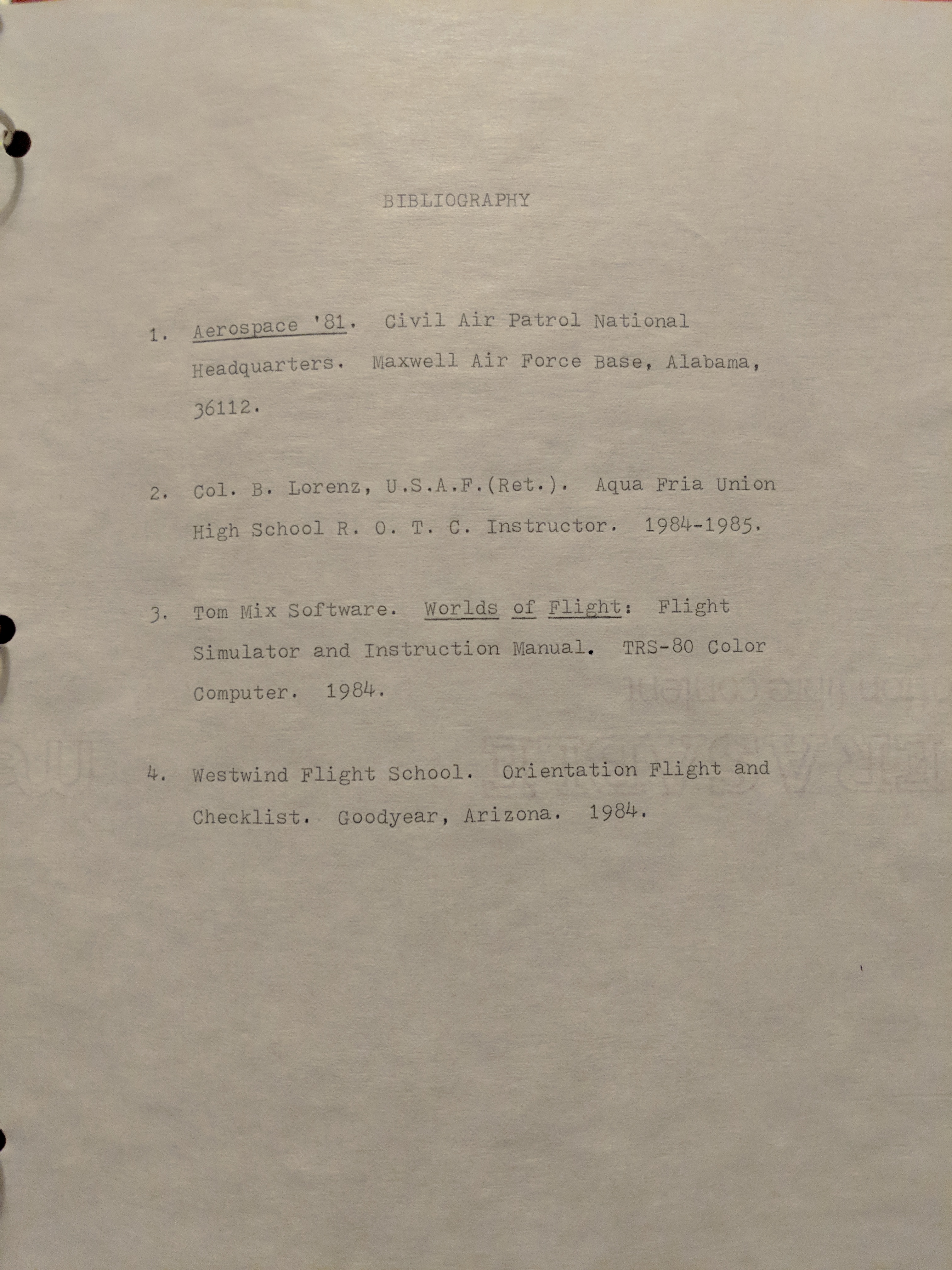
Typed bibliography of four sources, including Civil Air Patrol's Aerospace '81, an Air Force ROTC instructor, and a TRS-80 flight simulator.

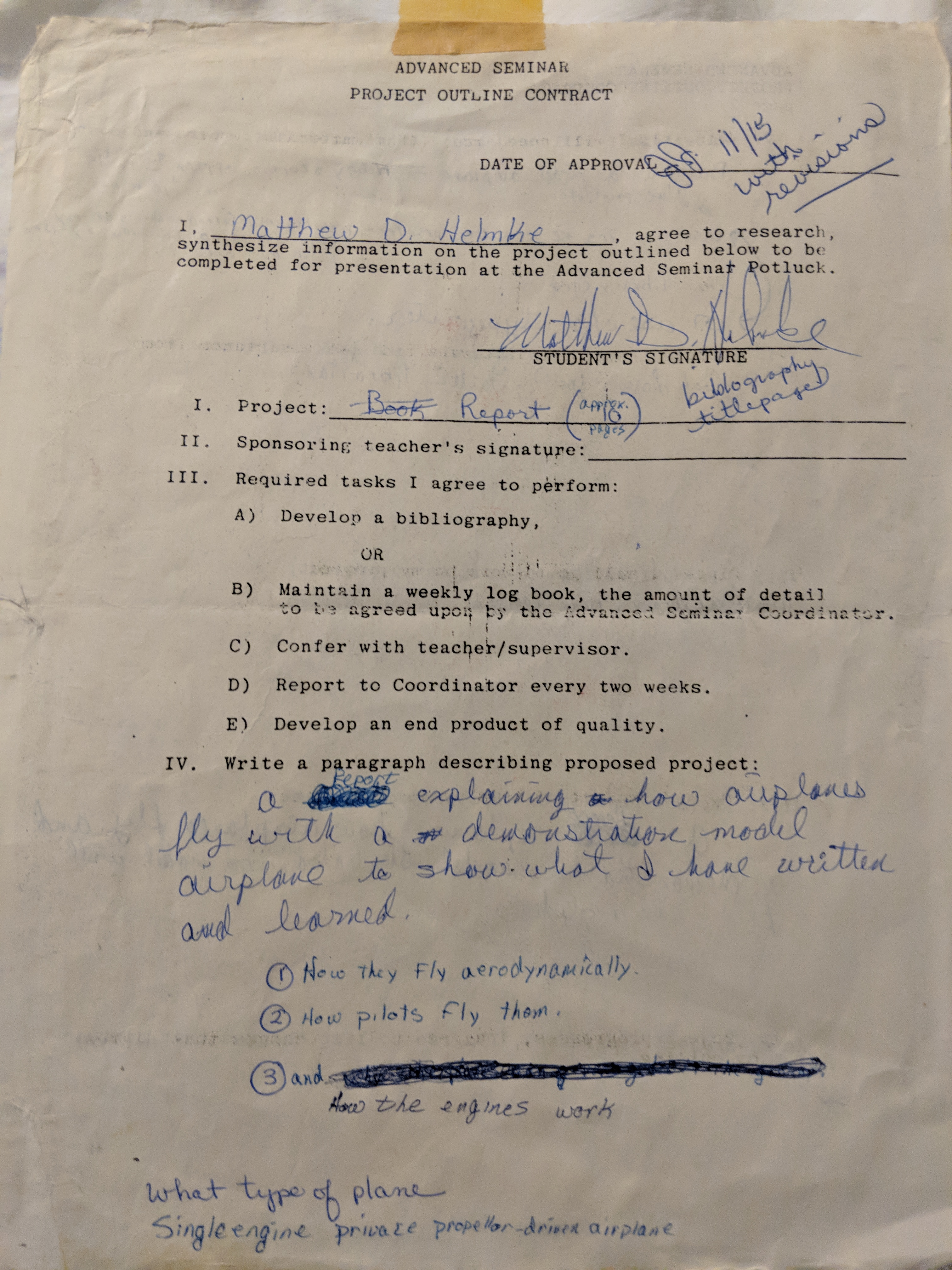
The signed Advanced Seminar project contract, in type and blue-ink handwriting, proposing a report and model showing how airplanes fly.

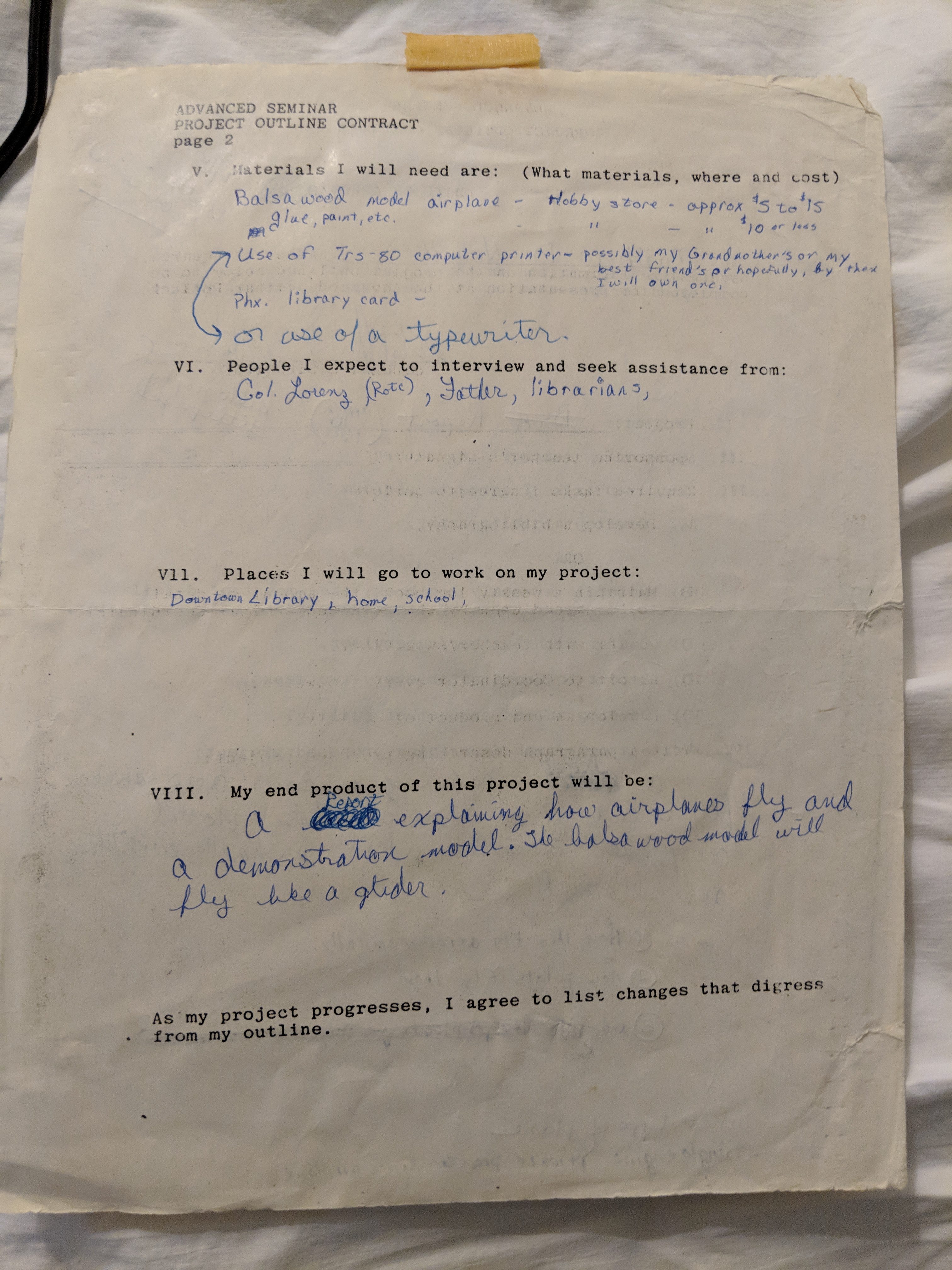
Page two of the project contract, listing materials — a balsa-wood model, a TRS-80 printer or a typewriter — people to interview, and the planned end product.